
Rodents After Hurricane Season in Boca Raton: What Happens, Why It Happens, and How to Stop It
Rodents After Hurricane Season in Boca Raton: What Happens, Why It Happens, and How to Stop It
Every summer, Boca Raton braces for hurricane season. Homeowners board windows, stock supplies, and trim trees. What most people don’t prepare for is what arrives days or weeks after the storm passes: a surge of rats and mice looking for exactly what the storm just destroyed — shelter, food, and dry ground.
Post-hurricane rodent influx is one of the most consistent and least-discussed pest problems in Palm Beach County. Competitors write a paragraph. We’re going to explain the whole picture — the biology, the timeline, the specific risks in Boca Raton’s environment, and the exact steps that protect your home.
Why Hurricanes and Tropical Storms Send Rodents Into Homes
Rodents don’t invade randomly. Every time one enters your home after a storm, it’s following a clear biological logic. Understanding that logic is the first step to stopping it.
Flooded Burrows Force Ground-Dwelling Rats Out
Norway rats — the heavy, burrowing species common in Boca Raton’s drainage canals and retention ponds — build their colonies underground. When Boca Raton receives a storm surge or 10+ inches of rain in 48 hours, those burrows flood completely. Colonies of 20 to 30 rats are suddenly homeless and moving fast. Your home’s foundation, garage, and crawl space look exactly like what they lost: dark, dry, and enclosed.
Roof Rats Follow the Debris Paths
Roof rats — the agile, slender climbers responsible for most attic infestations in South Florida — don’t burrow. They live in trees, dense shrubs, and elevated spaces. A major storm strips their canopy cover, snaps the branches they travel on, and pushes them off palm trees and ficus hedges. Once their arboreal network is disrupted, they follow the same debris routes they always use — utility lines, fence tops, and overhanging branches — straight to your roofline.
Disrupted Food Sources Drive Desperation
Storms destroy the fruit trees, bird feeders, compost bins, and outdoor food sources that keep rodent populations stable at a distance. With their normal food network gone, rats and mice begin probing structures they would normally avoid. Spoiled groceries from power outages, garbage that hasn’t been collected, and wet pet food left outside during cleanup all create a concentrated food signal that draws rodents from a wide area.
Storm Damage Opens Entry Points That Weren’t There Before
The average Boca Raton home is not rodent-proof even on a normal day. After a hurricane, it’s far less so. Torn soffits, displaced roof tiles, bent garage door frames, cracked stucco, and debris-blocked weep holes all create new access. Roof rats need an opening no wider than a quarter. Mice can compress through a gap the diameter of a pencil. A Category 1 storm creates dozens of openings in a single evening that weren’t on your radar before.
Boca Raton-specific factor: The city’s canal network — over 30 miles of waterways — runs directly behind and beneath residential neighborhoods. When those canals overflow during heavy storm events, Norway rat colonies from the canal banks are pushed directly into adjacent streets and yards. This is a displacement pattern unique to Boca Raton and the barrier island communities.
The Two Rodent Species You’ll Deal With in Boca Raton After a Storm
Every competitor article treats “rodents” as a single category. They aren’t. Roof rats and Norway rats behave differently, nest differently, and require different control approaches. Knowing which species you’re dealing with changes everything about how you respond.
🌴 Roof Rat (Rattus rattus)
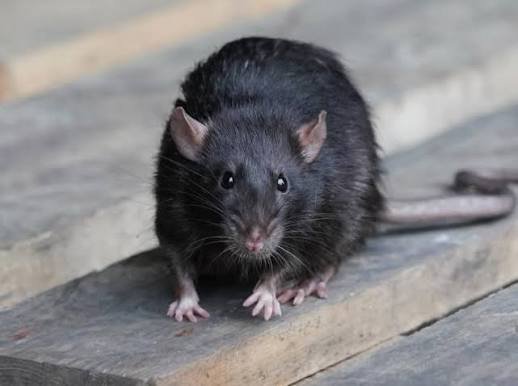
Slim, agile, dark-coated. Climbs royal palms, ficus, and utility lines. Enters through soffits, ridge vents, and roof-to-wall gaps. Nests in attics, wall voids, and ceiling cavities. Most common post-storm attic invader in Boca Raton. Leaves elongated droppings, ¾” long with pointed ends.
🌊 Norway Rat (Rattus norvegicus)
Heavy, blunt-nosed, brown or grey. Burrows near canals, dumpsters, and slab foundations. Enters through ground-level gaps, weep holes, and utility penetrations. Nests in walls below grade, under slabs, and in garages. Post-storm surge animal near waterways. Leaves capsule-shaped droppings, ¾” with blunt ends.
A third species — the house mouse (Mus musculus) — is smaller and can exploit entry points neither rat species can use, including gaps under door thresholds and around refrigerant lines. They’re typically secondary invaders, following in the weeks after a storm rather than immediately after.
The Post-Storm Rodent Timeline: When to Expect Activity
⏱ What Happens and When
- During the storm: Roof rats shelter in place. Norway rats begin evacuating flooded burrows. No entry activity yet.
- Hours 0–24 after the storm: Norway rat scouts begin probing structures near canals and retention ponds. First entry attempts at ground level.
- Days 1–3: Peak initial surge. Roof rats begin scouting damaged rooflines. Fresh storm damage makes entry far easier than normal.
- Days 4–10: Secondary wave. Rodents from neighboring properties begin expanding as those structures get treated or sealed. Mice enter later in this window.
- Weeks 2–4: Breeding begins in established nests. A female rat produces 6–12 pups per litter, with a gestation of 21 days. What started as 2 scouts can be a colony of 20 within a month.
- Month 2+: Established infestations. At this stage, removal requires full exclusion — not just trapping — because the rodents know the structure and have multiple entry routes.
Health Risks: What Competitors Don’t Tell You
Most pest control blog posts mention “disease” in passing. That’s not enough. Post-storm rodent infestations carry specific, documented health risks that every Boca Raton homeowner should understand — especially after flooding.
Leptospirosis
Rodent urine carries Leptospira bacteria. Flooded yards and standing water contaminated with rodent urine create direct exposure risk through skin contact — especially through cuts, abrasions, or mucous membranes. Florida ranks among the highest-incidence states for leptospirosis in the U.S. After a flood event, standing water near canal-adjacent properties should be treated as potentially contaminated.
Hantavirus
Transmitted through inhalation of dried rodent droppings or urine. The risk rises dramatically when rodents have nested in enclosed spaces — attics, garages, storage areas — that go undisturbed for days or weeks after a storm. Never sweep or vacuum fresh droppings dry. Always wet them with a diluted bleach solution first and use an N95 mask and gloves.
Salmonella
Rodents moving through kitchens, pantries, and countertops leave fecal contamination that can cause severe food poisoning. After a storm entry, assume any food storage area a rodent has accessed is contaminated — including dry goods in cardboard packaging, which rodents chew through easily.
Secondary Contamination: Attic Insulation
Roof rats nesting in attic insulation deposit urine throughout the material. Heat from the attic volatilizes that urine into the living space below through return air ducts and gaps in the ceiling plane. This is a long-term air quality issue that typically requires full insulation removal and replacement — not just rodent removal.
How to Inspect Your Home After a Storm: A Room-by-Room Guide
The first 72 hours after a storm are the most important window for preventing a full infestation. Here’s where to look and what you’re looking for:
Roof and Attic
- Check soffits, fascia boards, and ridge vents for displacement or tears
- Look for fresh gnaw marks on wood — new, bright wood color indicates recent chewing
- Inspect attic insulation for tunneling, droppings, or flattened areas (nesting)
- Check where utility lines and AC refrigerant lines penetrate the roofline — these are primary entry points for roof rats
Garage
- Check the door frame and weatherstripping — storm wind warps frames and creates ground-level gaps
- Inspect the corners and wall-to-floor junction for fresh droppings or grease marks (fur oils on rough surfaces)
- Check the garage door bottom seal — Norway rats can flatten themselves under a damaged seal
Kitchen and Utility Areas
- Pull out the refrigerator and stove — rodents use the heat, and gaps behind appliances are primary nesting sites
- Check under the sink for gaps around drain pipes — these are almost never properly sealed in Florida construction
- Look inside cabinet hinges and corners for droppings — fresh droppings are soft and dark; older ones are dry and grey
Exterior Foundation and Walls
- Walk the full perimeter looking for new stucco cracks, displaced weep holes, or gaps around AC line sets
- Check where irrigation and electrical conduit enters the wall
- In canal-adjacent properties: inspect the back fence line, especially gate posts, which Norway rats use as first-entry staging areas
Sealing: What Works and What Doesn’t
Sealing is the only permanent solution. Trapping removes individual animals; exclusion removes the infestation. Here’s what actually works:
- Hardware cloth (1/4″ mesh galvanized steel): Covers vents, soffits, and open pipe penetrations. Rats cannot chew through 20-gauge or heavier mesh. Avoid standard window screen — roof rats destroy it in minutes.
- Copper wool + caulk: Fills irregular gaps around pipes and conduit. Rats cannot chew copper wool. Steel wool rusts and fails within one season in Florida’s humidity — avoid it.
- Foam sealant alone: Not effective. Rats and mice chew through standard expanding foam in under 30 seconds. Only use foam as a backer for hardware cloth or metal flashing, never as the primary seal.
- Door sweeps and threshold seals: Replace any seal that shows light through it. A 1/4″ gap at the bottom of a door is enough for a juvenile rat.
Important: Never seal a structure with active rodents inside. Sealing entry points before full removal traps animals in walls, where they die and create odor problems, or forces them to chew new exits through drywall and insulation. Removal and exclusion must happen in the correct order.
Safe Cleanup of Rodent-Contaminated Areas After a Storm
This section does not exist in any competitor article. Here’s how to safely handle post-storm rodent contamination:
- Ventilate first: Open the space for 30 minutes before entry. Do not create air currents with fans — that aerosolizes dried particles. Natural cross-ventilation only.
- PPE minimum: Nitrile gloves, N95 respirator (not a paper dust mask), safety glasses.
- Wet the area: Spray droppings, urine stains, and nesting material with a 1:10 bleach-to-water solution. Let soak for 5 minutes before touching.
- Bag and seal: Use heavy-duty garbage bags, double-bagged. Do not compress the bag. Seal immediately.
- Disinfect surfaces: Wipe all surfaces with the bleach solution. Dispose of sponges and paper towels in the sealed bag.
- Wash hands and clothes immediately. Do not re-enter the area in the same clothing without washing.
Heavily contaminated attic insulation should not be cleaned — it should be removed and replaced by a professional with proper equipment. There is no safe way to decontaminate insulation that has been used as nesting material for weeks.
What to Do Right Now If You Think Rodents Entered After a Storm
The window between first entry and established colony is short — about two to three weeks. Acting in the first week makes the difference between a removal job and a full remediation project.
- Do your room-by-room inspection within 72 hours of the storm passing.
- If you find droppings, gnaw marks, or hear scratching at night — call a rodent specialist, not a general pest company. Rodent exclusion is a different skill set from pesticide application.
- Do not set snap traps without first confirming there are no active entry points. Trapping without exclusion reduces the population temporarily and is replaced by new animals within days.
- Remove all outdoor food sources immediately: pet food, bird feeders, open compost bins, citrus fruit on the ground.
- Document all new structural damage with photos before any storm-related repairs. Some homeowner policies cover rodent-related damage when it results directly from a storm event — photograph the connection.
Frequently Asked Questions
How long after a hurricane do rodents start entering homes?
Norway rats can begin probing structures within hours of floodwaters rising. Roof rats typically begin scouting damaged rooflines within 24–48 hours of a storm. The first 72 hours are the highest-risk window for initial entry.
Can I use rodenticide bait after a storm?
Rodenticide use after a storm carries elevated secondary poisoning risk — wildlife, owls, and domestic animals may consume a poisoned rodent. If you use bait, use tamper-resistant enclosed stations placed exclusively indoors or in secured areas, never in open spaces where non-target animals can access them. In most post-storm situations, trapping combined with exclusion is a safer and more effective approach.
My neighbor treated their home. Will rodents move to mine?
Yes — this is a well-documented phenomenon called “pressure displacement.” When one structure is treated without simultaneous exclusion, rodents push outward to adjacent properties. If multiple homes in a neighborhood are treating at the same time (which is common after a storm), the pressure can concentrate in untreated structures. This is why neighborhood-wide exclusion timing matters.
How do I know if it’s rats or mice?
Rat droppings are 3/4 inch or longer. Mouse droppings are 1/4 inch, pointed at both ends, and resemble rice. Gnaw marks from rats are rougher and larger than mouse gnaw marks. Footprints in dust or flour show four-toed front feet and five-toed hind feet for both — but rat prints are much larger. If you hear heavy thumping in the attic at night, it’s almost always rats; mice move quietly.
Does homeowner’s insurance cover post-storm rodent damage?
Standard homeowner’s policies exclude pest damage, but storm-related structural damage that creates a rodent entry point may be covered under your wind or flood policy. Document the damage sequence: storm damage → structural breach → rodent entry → interior damage. A public adjuster can help assess whether the chain of causation qualifies under your policy terms.
Heard Scratching Since the Last Storm?
Don’t wait for the colony to establish. Vermin Shield inspects for active entry points and removes rodents with permanent exclusion — not just trapping. Serving all of Boca Raton and Palm Beach County.
Call (561) 407-6349 — Same-Day Response© 2026 Vermin Shield Boca Raton | Privacy Policy | (561) 407-6349