
Roof Rats in Boca Raton: How to Identify Them, Where They Hide & What to Do (2026 Guide)
Quick Answer: Roof rats (Rattus rattus) are the most common rodent in Boca Raton, FL. They are slender, dark-colored climbers that live in attics, walls, and palm trees — not at ground level. If you hear scratching in your ceiling between 11 PM and 3 AM, smell ammonia in your attic, or find small spindle-shaped droppings, you almost certainly have roof rats. The only permanent solution is professional exclusion — sealing every entry point — combined with population removal.
What Are Roof Rats — And Why Does Boca Raton Have So Many?
Roof rats, scientifically known as Rattus rattus, are also called black rats, ship rats, tree rats, and attic rats. They are the dominant rat species across South Florida and the overwhelming majority of rodent calls in Boca Raton involve this species specifically — not Norway rats and not mice.
According to the University of Florida’s IFAS Extension, roof rats thrive in Florida’s subtropical climate and are significantly more common here than in any other part of the continental United States. Several factors make Boca Raton a particularly high-risk city:
- Mature tree canopy — Boca Raton’s Royal Palm trees, avocado trees, citrus trees, and strangler figs create aerial highways roof rats use to move from property to property without touching the ground
- Waterfront geography — Properties along the Intracoastal Waterway, Boca del Mar canals, and Lake Boca Raton have dense vegetation and water sources that support large rodent populations year-round
- Mild winters — Unlike northern states where cold kills off populations, Boca Raton’s winter temperatures rarely threaten roof rats; they breed year-round with litters of 6–8 pups every 30 days
- Older construction in East Boca — Homes built in the 1960s–1980s along Palmetto Park Road, Camino Real, and A1A have aged fascia, open soffits, and gaps that modern construction codes have since addressed
- New construction adjacent to green space — West Boca developments along Glades Road and Clint Moore Road back up to conservation land, pushing displaced rodents into new neighborhoods regularly
Our roof rat control service in Boca Raton handles more calls involving this species than any other. Understanding what you’re dealing with is the first step toward fixing it permanently.
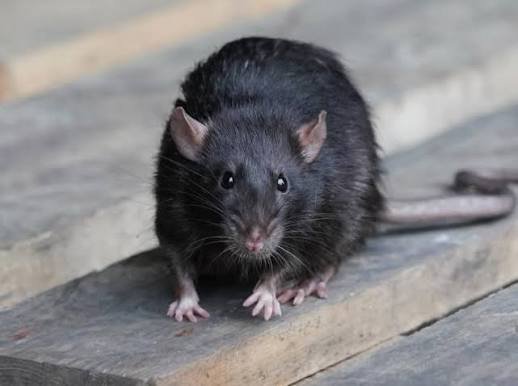
How to Identify a Roof Rat — Exactly What They Look Like
Misidentifying the rodent species in your home is one of the most common reasons treatments fail. Roof rats, Norway rats, and house mice all require different trap placement, bait types, and exclusion strategies. Here is exactly what to look for:
Physical Characteristics of Roof Rats
- Body length: 6–8 inches (not including tail)
- Tail: Longer than the body — 7–10 inches; scaly and dark
- Weight: 4–12 oz — noticeably lighter than a Norway rat
- Color: Black, dark brown, or gray on top; pale gray or cream underside
- Ears: Large and prominent — extend forward past the eyes
- Nose: Pointed snout
- Eyes: Large and dark — adapted for nighttime navigation in high places
- Build: Slender and agile — built for climbing, not burrowing
Roof Rat vs Norway Rat vs House Mouse — Comparison Table
| Characteristic | Roof Rat | Norway Rat | House Mouse |
|---|---|---|---|
| Size | 6–8 in body, slender | 9–11 in body, heavy | 2.5–3.5 in body, tiny |
| Tail | Longer than body | Shorter than body | Equal to body length |
| Where they live | Attic, ceiling, trees | Ground level, burrows, drains | Walls, cabinets, low areas |
| Droppings | Spindle-shaped, 12–13mm | Capsule-shaped, 18–20mm | Rice-grain size, 3–6mm |
| Behavior | Climber, agile, cautious | Burrower, strong swimmer | Explorer, squeezes into tiny gaps |
| Boca Raton frequency | Very common (dominant species) | Less common | Occasional |
| Treatment approach | Elevated snap traps + soffit/attic exclusion | Ground-level bait stations + foundation exclusion | Interior snap traps + pipe/wall gap sealing |
For a deeper comparison, read our guide: Roof Rat vs Norway Rat in South Florida — Which One Do You Have?
Where Do Roof Rats Hide in Boca Raton Homes?
Roof rats are aerial animals. They rarely come to ground level voluntarily. Understanding their specific locations in a Boca Raton home explains why homeowners often live with an infestation for months before realizing the scale of the problem.
Inside Your Home
- Attic insulation — The most common nesting site. Roof rats tear insulation to create warm nesting chambers. A single female can produce 40+ pups per year, all nesting in your attic insulation. This is why attic rodent cleanup in Boca Raton is often needed after removal — contaminated insulation must be replaced.
- Wall voids between the exterior wall and interior drywall — Roof rats use vertical wall gaps as travel corridors between the attic and lower floors
- Above drop ceilings — Common in older East Boca homes and commercial properties near Mizner Park and Federal Highway
- Inside kitchen cabinet soffits — The dead space above upper cabinets that backs to exterior walls is a prime hiding zone
- Behind water heaters and HVAC units — Warm, quiet, rarely disturbed
Outside Your Home
- Royal Palm and coconut palm fronds — The dead fronds hanging from palms are preferred nesting sites across all Boca Raton ZIP codes
- Avocado and citrus trees — Roof rats are heavily attracted to fruit. Properties with avocado, mango, lime, lemon, or orange trees in 33431, 33432, and 33433 consistently show higher activity
- Strangler figs and ficus hedges — Dense, established hedges used as privacy screening along A1A, El Camino Real, and Palmetto Park Road provide ideal cover
- Bougainvillea vines — Extremely common in Boca Raton landscaping; roof rats nest inside the dense thorn structure
- Utility lines and fences — Roof rats use power lines, wooden fences, and stucco walls as travel routes between neighboring properties
Properties along the Boca Raton waterfront and Intracoastal face elevated pressure because the dense vegetation along canals and waterways supports large, stable roof rat populations that push into adjacent structures year-round.
8 Signs You Have Roof Rats in Your Boca Raton Home Right Now
Roof rats are nocturnal and secretive. By the time you see one, the infestation is typically well-established. These are the signs to check — in order of reliability:
1. Scratching and Running Sounds After 11 PM
The most consistent early sign. Roof rats are most active between 11 PM and 3 AM. You’ll hear rapid scratching, running, and occasional thumping in the ceiling or upper walls. The sounds move — this distinguishes roof rats from a single trapped animal.
2. Spindle-Shaped Droppings in the Attic or Near Food
Roof rat droppings are 12–13mm, pointed at both ends, and dark brown to black when fresh, turning grey as they dry. Finding more than 30–40 droppings in one area indicates an active, established population rather than a single animal exploring.
3. Grease Rub Marks Along Walls and Pipes
Roof rats repeatedly use the same travel routes. Their oily fur leaves dark smear marks on walls, beams, pipes, and along the top of wall plates in the attic. These rub marks are one of the most definitive signs of an established runway.
4. Chewed Electrical Wiring, Wood, and Pipe Insulation
Roof rats must constantly gnaw to manage their teeth growth. Chewed wiring is a serious hazard — the National Fire Protection Association attributes approximately 20–25% of unknown-cause house fires to rodent-damaged wiring. In Boca Raton’s older construction stock along Ocean Boulevard and Palmetto Park, this risk is particularly relevant.
5. Ammonia Smell in the Attic
A large roof rat colony produces significant urine volume. Attics with established populations have a distinct, sharp ammonia odor that becomes noticeable from the attic access hatch. If you smell this before you even open the hatch, the infestation is significant.
6. Disturbed or Compacted Attic Insulation
Roof rats nest in insulation, compacting and contaminating it. If your insulation looks matted, tunneled, or stained in areas — particularly near exterior walls — it indicates active nesting. Contaminated insulation loses 40–60% of its R-value and must be replaced.
7. Your Pets Are Acting Strangely at Night
Dogs and cats detect roof rats before humans do. If your pet is fixated on a wall, ceiling, or cabinet area — staring, scratching, or sitting unusually still — take it seriously as an early detection signal.
8. Fruit Disappearing from Your Trees Overnight
Roof rats are prolific fruit consumers. If you have citrus, avocado, lychee, or starfruit trees and notice fruit disappearing, being found half-eaten on the ground, or missing completely before it falls — roof rats are almost certainly feeding on them nightly and nesting nearby.
If you’re seeing two or more of these signs, book a professional rodent inspection in Boca Raton before the population grows further. Roof rat populations double roughly every 6–8 weeks under optimal conditions.
What Attracts Roof Rats to Boca Raton Properties Specifically
Roof rats don’t target your home randomly. They assess five things before committing to a structure: food, water, shelter, warmth, and safe travel routes. Boca Raton’s built environment delivers all five simultaneously, which is why the problem is so persistent here.
- Fruit trees — A single mature avocado tree can sustain a roof rat colony indefinitely. Boca Raton’s warm climate supports year-round fruit production, meaning roof rats never face seasonal food shortages
- Bird feeders and outdoor pet food — Among the most common entry triggers our inspection team identifies across Boca del Mar and East Boca neighborhoods
- Unsecured garbage bins — Commercial areas near Mizner Park, Town Center, and Federal Highway restaurants create food pressure that pushes roof rats into adjacent residential areas
- Decorative water features and irrigation runoff — Standing water in lake-adjacent communities including Boca del Mar (33433) and the Polo Club (33496) provides reliable water sources
- Tree branches touching the roofline — Branches within 6 feet of your roof are direct access ramps. Once one rat establishes an attic entry, it leaves scent trails that attract others from neighboring properties
The Health Risks Roof Rats Pose to Boca Raton Families
Roof rats are not just a structural problem — they are a documented public health risk. The Centers for Disease Control and Prevention (CDC) identifies roof rats as carriers of several diseases transmissible to humans, directly and through secondary vectors like fleas and ticks.
Primary Health Risks in South Florida
- Leptospirosis — The most common rodent-transmitted disease in Florida. Spread through urine contaminating water or soil. The Florida Department of Health reports Florida consistently among the highest-incidence states for leptospirosis nationally due in part to year-round rodent activity
- Murine Typhus — Transmitted by rat fleas. Palm Beach County sees sporadic murine typhus cases annually, particularly in areas with high feral cat and rodent interaction
- Rat-bite Fever — Transmitted through bites, scratches, or contact with rat urine or droppings. Can cause severe fever, rash, and joint pain
- Salmonellosis — Roof rats contaminate food preparation surfaces and pantry items with droppings and urine. This is particularly relevant in kitchen areas where rat activity often goes undetected in cabinet soffits
- Hantavirus — While rare in Florida compared to western states, disturbing dry rodent droppings without proper respiratory protection is the primary transmission route. This is why professional attic rodent cleanup with HEPA equipment matters
Beyond direct disease transmission, roof rat infestations introduce fleas, ticks, and mites into the home — pests that can independently sustain populations after the rodents are removed if the cleanup is not thorough.
Roof Rat Season in Boca Raton — Month-by-Month Risk Calendar
Unlike northern states where cold winters suppress rodent populations, Boca Raton’s subtropical climate means roof rats are active every month of the year. However, activity peaks and entry events concentrate in specific windows.
| Month(s) | Risk Level | Key Driver |
|---|---|---|
| October – December | ⬆ Very High | Cooler nights drive rats indoors; avocado/citrus season peaks |
| January – February | ⬆ High | Peak infestation season; snowbird influx disturbs adjacent properties |
| March – April | ➡ Moderate–High | Established colonies breeding; population increases |
| May – June | ➡ Moderate | Heat and rainy season begin; rats seek dry attic shelter |
| July – September | ➡ Moderate | Rainy season; mango/lychee season feeds outdoor colonies; still active |
The takeaway for Boca Raton homeowners: There is no safe month to ignore evidence of roof rat activity. An infestation discovered in July will be significantly worse by November if not addressed.
Where Roof Rats Are a Problem by Boca Raton Neighborhood
Our inspection data across Boca Raton shows consistent patterns by neighborhood — largely driven by tree canopy density, construction age, and proximity to green space and waterways.
- East Boca Raton (33432) — High activity. Older homes (1950s–1980s), mature trees, proximity to the Intracoastal, and established canopy make East Boca one of the highest-call neighborhoods we service
- Boca del Mar (33433) — High activity. Canal-adjacent properties, dense landscaping, and established palm trees throughout this community drive consistent activity
- Downtown Boca Raton (33431) — Moderate–high activity. Restaurant and retail activity near Mizner Park and Federal Highway creates food pressure in adjacent residential streets; older mixed-use buildings have significant gap exposure
- Mizner Park area — Moderate activity. New construction has better building envelope integrity, but proximity to food service increases external colony pressure
- Boca West Country Club — Moderate activity. Manicured landscaping and water features throughout the community; golf course perimeter vegetation supports seasonal population movement
- West Boca Raton (33498) — Moderate activity, increasing. New development pushes displaced wildlife including roof rats into adjacent communities; conservation land borders create ongoing pressure
- Polo Club (33496) — Moderate. Gated community with newer homes, but large estate lots with extensive mature landscaping support localized colonies
The Right Way to Get Rid of Roof Rats in Boca Raton — Step by Step
There is a specific sequence that must be followed for roof rat removal to be permanent. Skipping steps is why most treatments fail — and why rats keep coming back after treatment in so many Boca Raton homes.
Step 1: Professional Inspection First
Before any treatment, you need to know: which species, how many entry points, how severe the infestation, and where nesting is occurring. A professional rodent inspection maps all of this in a written report with photos — it’s the only way to build a treatment plan that actually works.
Step 2: Population Removal (Trapping)
Snap traps placed along active runways in the attic — along beams, near grease marks, and at entry-point areas — remove the active population. This step takes 1–3 weeks depending on colony size. Poison baiting alone is not recommended as a primary treatment in Boca Raton because dead rats inside walls and attics create odor and secondary pest problems.
Step 3: Full Entry Point Exclusion
This is the most critical step and the one most companies skip or perform inadequately. Rodent exclusion in Boca Raton means physically sealing every gap larger than a quarter inch — soffit vents, pipe penetrations, roof-to-fascia gaps, weep holes, and utility entries — using materials roof rats cannot chew through: galvanized steel mesh, copper wool, and mortar.
Step 4: Attic Cleanup (If Needed)
After population removal and exclusion, contaminated insulation must be assessed. Heavily infested attics require full insulation removal, HEPA vacuuming of droppings, enzyme treatment of surfaces, and re-insulation. This is covered in our Boca Raton attic rodent cleanup service.
Step 5: Exterior Attractant Removal
Trim all tree branches to 6+ feet from the roofline. Remove fallen fruit daily. Switch to rodent-resistant garbage containers. Eliminate standing water sources. Read our full guide: How to Rat-Proof Your Boca Raton Home.
Why DIY Roof Rat Control Doesn’t Work in Boca Raton
Hardware store snap traps can catch individual rats, but they do nothing to address the underlying entry points. In Boca Raton’s connected neighborhood landscape, new roof rats move in from adjacent properties, tree canopies, and community green spaces within weeks of any population reduction. Trapping without exclusion is the rodent control equivalent of bailing water from a boat without plugging the hole.
This is the primary reason we documented in our post on why rats keep coming back after treatment in Boca Raton. The science is consistent: exclusion is the only intervention with permanent outcomes.
The University of Florida’s rodent management guidelines are explicit on this point — exclusion must accompany any population removal effort for long-term success.
When to Call for Emergency Rodent Control
Some situations require immediate response rather than a scheduled appointment. Call our emergency rodent control line in Boca Raton if you are experiencing:
- Loud, constant overnight activity indicating a large, established colony
- Visible rat in the living areas of the home (not just attic)
- Chewed wiring discovered — fire risk requires immediate action
- Rat found near infant or young children’s sleeping area
- Suspected rat bite or direct human contact with a rodent
Frequently Asked Questions — Roof Rats in Boca Raton
Are roof rats common in Boca Raton, FL?
Yes. Roof rats (Rattus rattus) are the most common rodent in Boca Raton and throughout Palm Beach County. Florida’s warm, humid subtropical climate, combined with Boca Raton’s mature tree canopy, fruit trees, and waterfront properties, creates ideal year-round conditions for roof rat populations. Our inspection team encounters roof rats in the vast majority of residential rodent calls across all Boca Raton ZIP codes.
What is the difference between a roof rat and a Norway rat in Boca Raton?
Roof rats are slender, dark-colored climbers that live in attics, trees, and upper structures. Norway rats are larger, heavier burrowers found at ground level near foundations and drainage. Boca Raton has far more roof rats than Norway rats due to the region’s tree cover and building styles. The treatment approach is completely different for each — which is why correct identification before treatment is essential. See our full comparison: Roof Rat vs Norway Rat in South Florida.
What time of year are roof rats most active in Boca Raton?
Roof rats in Boca Raton are most active from October through March, when cooler nights push them to seek warmth indoors. However, unlike northern states, Boca Raton’s year-round mild climate means roof rat activity never fully stops — infestations can begin in any month and established colonies breed continuously.
How do roof rats get into Boca Raton homes?
Roof rats enter through gaps as small as a quarter inch. The most common entry points in Boca Raton homes are open or deteriorated soffit vents, gaps around pipe and wire penetrations through the roofline, damaged fascia boards, gaps where roof tiles meet the soffit edge, and tree branches acting as ramps to the roof. They can climb stucco walls vertically and jump horizontally up to 4 feet. A professional inspection identifies and maps every entry point.
Can I get rid of roof rats myself in Boca Raton?
DIY trapping can temporarily reduce the population but never permanently solves the problem because it doesn’t seal entry points. In Boca Raton’s connected neighborhoods, new rats move in from adjacent properties and tree canopies within weeks. A permanent solution requires professional exclusion — sealing every entry point — combined with systematic population removal.
How much does roof rat removal cost in Boca Raton?
A professional inspection in Boca Raton is $89 — applied toward treatment if you proceed. Full exclusion with entry point sealing ranges from $499 to $1,200+ depending on the home size and number of gaps. Trapping-only service starts from $299. Full treatment packages (inspection + trapping + exclusion) start from $799. Visit our services and pricing page for current rates.
Boca Raton’s Roof Rat Specialists
Hearing Scratching in Your Attic Tonight?
Don’t wait — roof rat populations double every 6–8 weeks. Our licensed inspectors serve all Boca Raton ZIP codes: 33431, 33432, 33433, 33434, 33486, 33487, 33496, 33498. Same-day inspection available.
Call (561) 407-6349 — Same-Day ResponseOr visit our contact page to schedule online · See our client reviews · Rodent Control FAQs
One Comment