Roof Rat vs Norway Rat in South Florida: How to Tell Them Apart
If you’ve heard scratching in your attic or seen droppings near your garage, the first question a pest control technician asks is: what species are you dealing with? In Boca Raton, the answer almost always comes down to two rats — the Roof Rat (Rattus rattus) and the Norway Rat (Rattus norvegicus). They behave differently, nest differently, and require different treatment strategies. Here’s how to tell them apart and why it matters.
Physical Differences at a Glance
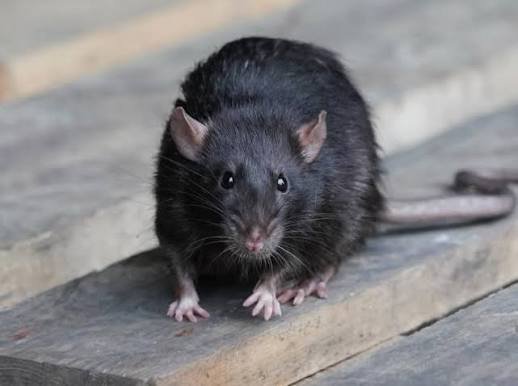
Roof Rat: Slender body, pointed nose, large ears, long tail (longer than body + head combined), smooth dark-grey or black coat. Adults weigh 5–10 oz. Eyes are large and expressive.
Norway Rat: Stocky body, blunt nose, small ears relative to head size, shorter scaly tail, shaggy brown-grey coat. Adults weigh 10–17 oz — noticeably heavier when you pick one up in a trap. Sometimes called brown rats or sewer rats.
The easiest field ID: look at the tail. Roof rat tail reaches the nose when laid flat along the body. Norway rat tail stops at the shoulder. That one observation settles 90% of identifications.
Where Each Species Lives in Boca Raton
This is where the difference really matters for treatment:
Roof Rats dominate Boca Raton. They are arboreal — they live high. In South Florida, you’ll find them nesting in attic insulation, inside palm tree skirts, in dense ornamental plants (birds of paradise, bromeliads, bougainvillea), and in the soffits and fascia of residential structures. When you hear scratching above the ceiling at night, it’s almost certainly a Roof Rat. They enter through the roofline — gaps in fascia boards, unscreened soffit vents, and the junction where tile meets the structure are their highways.
Norway Rats are ground-level operators. They burrow. You’ll find their runs along fence lines, under concrete slabs, in compost bins, storm drains, and beneath landscape timbers. In Boca Raton they’re more common in waterfront neighborhoods where drainage infrastructure provides ideal harborage — areas near the Intracoastal and canal systems see higher Norway Rat pressure. They enter homes through low-level gaps: weep holes in CBS block walls, gaps around drain pipes, and open garage doors.
Diet and Behavior Differences
Roof Rats are frugivores by preference — in Boca Raton’s landscape, fallen mangoes, avocados, and citrus are primary attractants. They’re also neophobic (suspicious of new objects), which means snap traps need to be left unset for several days before being triggered, or they’ll simply avoid them. They’re agile enough to run along fence tops and electrical lines to access a roof.
Norway Rats are omnivores with a preference for proteins and grains. Garbage, pet food, and compacted compost draw them in. They’re bolder than Roof Rats around new objects, which makes them somewhat easier to trap — but their burrowing means you need to address the ground-level harbor before trapping, or new individuals simply move in.
How Treatment Differs
For Roof Rats: Exclusion focuses on the roofline. Every gap at fascia, every unscreened vent, and every point where branches or palms overhang the roof must be addressed. Trapping uses elevated placements — snap traps secured to rafters or along top plates in the attic, not on the floor. Bait stations should be wall-mounted or tree-mounted, not ground level. Because Roof Rats are wary, it often takes 5–10 days before they approach new trap placements.
For Norway Rats: Exclusion focuses on the foundation level. Weep holes, pipe penetrations, and the base of the garage door are priority targets. Trapping uses ground-level snap traps placed perpendicular to runs along walls and fence bases (rats travel along edges — they rarely cross open space). Burrows should be probed and collapsed before placing traps near them. Active burrows have fresh soil excavation and no cobwebs at the entrance.
See our Rodent Control FAQ for more on bait station placement regulations near water in HOA communities — this matters especially for the Intracoastal and canal neighborhoods where Norway Rats concentrate.
Which Species Is in Your Boca Raton Home?
You can often determine the species before you ever see a live rat:
Droppings: Roof Rat droppings are smaller (½ inch, banana-shaped with pointed ends). Norway Rat droppings are larger (¾ inch, capsule-shaped with blunt ends). Found near the attic hatch? Roof Rat. Found near the garage floor or under the sink? Norway Rat.
Sound location: Overhead at night = Roof Rat. Sounds coming from inside walls at a low level, or from beneath the slab = Norway Rat.
Evidence location: Gnaw marks on fruit in trees or on attic wood = Roof Rat. Burrowing near the foundation or under landscape rocks = Norway Rat.
A professional rodent inspection in Boca Raton will confirm species through a combination of droppings, tracks (tracking powder can be applied in suspect areas), and direct sighting if an animal is present during the visit. Species ID drives everything that follows — the trap placement, the exclusion focus, and the bait selection. Getting it wrong means treating for the wrong rat while the actual infestation continues. See what a full inspection and treatment costs in 2026, or contact Vermin Shield to schedule same-day service in Boca Raton.
Not sure which species you have? Our inspectors cover every Boca Raton neighborhood — from Intracoastal waterfront homes where Norway Rats dominate the canal banks, to the FAU corridor where dense landscaping and restaurant waste keep Roof Rat colonies active year-round. Species ID is the first thing we confirm at every inspection, because it drives every decision that follows.
© 2026 Vermin Shield Boca Raton | Privacy Policy | (561) 407-6349
One Comment