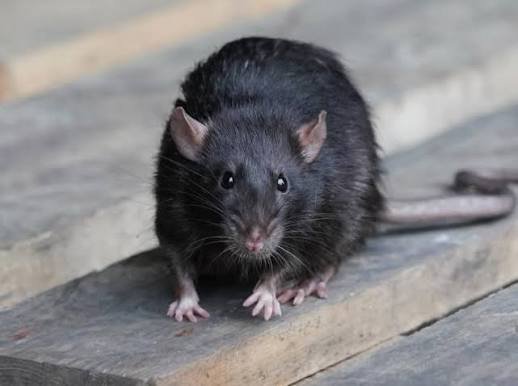
Roof Rat vs Norway Rat in South Florida — Which One Do You Have?
You heard something in your attic last night. Maybe you spotted droppings near the garage, or noticed a gnawed corner on your pantry shelf. Whatever tipped you off, you know you have a rat — but which rat?
In South Florida and Boca Raton specifically, two species account for virtually every rat problem homeowners call about: the roof rat (Rattus rattus) and the Norway rat (Rattus norvegicus). They look different, live in different places, behave differently, and require a different approach to control. Treating for the wrong species wastes time and money.
This guide will show you exactly how to identify which rat you’re dealing with, where each species hides in South Florida homes, how to read the clues they leave behind, and what to do next.
Roof Rat vs Norway Rat: Side-by-Side Comparison
Before diving into details, here’s a fast-reference table covering the most important differences.
| Trait | Roof Rat (Rattus rattus) | Norway Rat (Rattus norvegicus) |
|---|---|---|
| Also called | Black rat, ship rat, fruit rat, palm rat | Brown rat, sewer rat, wharf rat, street rat |
| Body length | 6–8 inches | 7–10 inches |
| Weight | 5–9 oz (slender) | 7–18 oz (heavy-bodied) |
| Tail | Longer than body + head combined | Shorter than body length |
| Ears | Large, prominent | Small, close to head |
| Nose shape | Pointed, narrow | Blunt, rounded |
| Fur color | Dark gray, brown, or black; lighter belly | Brownish-gray; pale gray or white belly |
| Preferred habitat | Attics, soffits, trees, upper wall voids | Burrows, sewers, ground-floor areas, slabs |
| Activity level in S. FL | Very common — dominant species | Less common; more prevalent in urban cores |
| Climbing ability | Excellent — travels through tree canopy | Poor climber; stays near ground |
| Droppings shape | Spindle-shaped with pointed ends (~½ in) | Capsule-shaped with blunt ends (~¾ in) |
| Entry points | Roofline gaps, soffits, utility lines, vents | Foundation gaps, garage doors, drain pipes |
| Disease risk | Murine typhus, leptospirosis, salmonella | Leptospirosis, rat-bite fever, salmonella |
The Roof Rat (Rattus rattus) — South Florida’s Dominant Invader
If you live in Boca Raton — or anywhere in Palm Beach, Broward, or Miami-Dade County — and you have a rat problem, the overwhelming probability is that you’re dealing with a roof rat. According to the University of Florida IFAS Extension, roof rats are the most significant rodent pest in Florida and thrive in the subtropical climate that makes South Florida such attractive habitat year-round.
What Roof Rats Look Like
Roof rats are athletic-looking animals. Their bodies are lean and streamlined, built for climbing. Key visual identifiers:
- Tail rule: Lay the tail back along the body — it should reach the nose and then some. If the tail is clearly longer than the combined body + head length, you have a roof rat.
- Ears: Large, nearly hairless ears that seem almost oversized for the head.
- Nose: Pointed and narrow — almost mouse-like in proportion to the body.
- Fur: Typically dark gray to charcoal on the back, lighter gray or cream on the belly. Some individuals are brown.
- Eyes: Large and prominent.
- Size: Total length including tail: 13–18 inches. Body alone: 6–8 inches.
Where Roof Rats Live in Boca Raton Homes
True to their name, roof rats live high. In South Florida homes, they exploit the entire upper envelope of the structure:
- Attic insulation — They nest in the blown-in insulation, compressing it and contaminating it with droppings and urine.
- Soffit and fascia voids — Gaps where the soffit meets the roofline are primary entry points. A roof rat can squeeze through a hole the size of a quarter.
- Roof vents and gable vents — Damaged or unscreened vents are open invitations.
- Wall voids (upper floors) — They travel between floors through plumbing chases and wall cavities.
- Utility lines — Roof rats run along power lines, cable lines, and tree branches to reach rooflines. This is why overhanging trees near your home are a major risk factor.
In Boca Raton’s lush landscape — with mature mahogany trees, palms, and Florida-friendly gardens close to homes — roof rats have abundant arboreal highways into properties. Rodent exclusion that addresses roofline entry points is the most effective long-term solution.
Roof Rat Clues and Signs
Beyond a direct sighting, roof rats leave specific evidence:
- Droppings: Dark, spindle-shaped pellets about ½ inch long with pointed ends. Found in the attic, on top of insulation, on rafters, and along travel paths.
- Sounds: Scurrying, scratching, and rolling noises in the ceiling or attic, typically at night. The rolling sound is often nuts or debris being moved.
- Gnaw marks: On attic wood, PVC pipe insulation, electrical wires — roof rat gnawing on wiring is a documented fire risk.
- Grease rub marks: Dark, oily smears along rafters and joists where the rat regularly travels.
- Fruit damage: Roof rats are excellent fruit foragers. Partially eaten citrus, avocados, or mangoes in your yard — hollowed out from the inside — are a classic South Florida roof rat sign.
- Nests: Shredded insulation, leaves, and soft material woven into a compact ball, usually tucked in a corner of the attic.
Health Risks: Roof Rats in South Florida
Roof rats are the primary reservoir for murine typhus in Florida, transmitted through infected fleas. The Florida Department of Health tracks murine typhus cases in Palm Beach County annually, with the highest concentrations in coastal communities — exactly where roof rats thrive. They also carry leptospirosis, salmonella, and their ectoparasites can introduce fleas and mites into your home.
The Norway Rat (Rattus norvegicus) — The Ground-Level Threat
Norway rats are the larger, stockier counterpart to the agile roof rat. While less prevalent in Boca Raton’s residential neighborhoods than roof rats, they do appear — especially near commercial areas, waterways, storm drains, and properties with heavy vegetation at ground level.
What Norway Rats Look Like
- Tail rule: The tail is clearly shorter than the body length — it will NOT reach the nose when laid back.
- Build: Heavy and muscular. Noticeably thicker through the body than a roof rat.
- Ears: Small, close to the head.
- Nose: Blunt and rounded.
- Fur: Coarse, brownish-gray on back; pale gray or white on belly.
- Size: Total length including tail: 13–18 inches (similar total length, but heavier body). Can weigh up to 18 oz.
Where Norway Rats Live in South Florida
Norway rats are burrowers, not climbers. Their preferred environments are at or below ground level:
- Ground-level burrows — Along fence lines, beneath concrete slabs, under wood decks, and in dense vegetation around the foundation.
- Storm drains and sewer systems — Norway rats are comfortable in wet environments and often enter structures through drain pipes.
- Garage floors and utility rooms — Lower-level wall voids, especially near plumbing.
- Compost bins and trash areas — Ground-level food sources attract Norway rats quickly.
- Commercial dumpster areas — Near restaurants and retail in areas like Downtown Boca Raton or Mizner Park, Norway rats are more prevalent than in residential neighborhoods.
Norway Rat Clues and Signs
- Droppings: Larger than roof rat droppings — blunt, capsule-shaped pellets up to ¾ inch long. Found at ground level near food sources.
- Burrows: Smooth-walled holes, 2–3 inches in diameter, in soil near the foundation, under concrete, or alongside walkways. Fresh burrows have loose dirt at the entrance.
- Sounds: Scratching in lower wall voids, near the floor — not in the ceiling.
- Gnaw marks: At ground level on wood, plastic pipes, or food packaging.
- Runways: Packed-down paths in grass or vegetation along regular travel routes between burrows and food sources.
Health Risks: Norway Rats
Norway rats are the primary reservoir for leptospirosis, a bacterial infection spread through rat urine that can contaminate soil and standing water — a real concern in South Florida’s wet season. According to the CDC, leptospirosis thrives in warm, humid environments. They also carry rat-bite fever, salmonella, and can undermine structural integrity by burrowing beneath foundations and slabs.
Why South Florida’s Climate Makes Both Species Thrive Year-Round
Unlike northern states where rat populations drop in winter, Boca Raton’s climate provides no natural population check. With average lows rarely dropping below 55°F even in January, and year-round access to food from fruit trees, landscaping, and outdoor dining, both roof rats and Norway rats breed continuously in Palm Beach County.
Key South Florida factors that worsen rat pressure:
- Mature tree canopy: Dense neighborhoods like East Boca (33432), Boca West (33496), and the Mizner Park area provide abundant arboreal routes for roof rats to travel between properties.
- Fruit trees: Citrus, avocado, mango, and fig trees are roof rat magnets. A single neglected fruit tree can support multiple roof rat families.
- Hurricane-damaged structures: Wind damage to soffits, vents, and rooflines creates entry points that rats exploit within days.
- Intracoastal proximity: Waterfront and intracoastal properties in Boca Raton face elevated Norway rat pressure from the marine environment.
- Storm drain systems: Heavy summer rains push Norway rats from flooded burrows into residential structures.
These same pressures mean that a rat problem in Boca Raton rarely resolves on its own. Our guide on roof rats in Boca Raton covers the full seasonal behavior cycle.
How to Identify Your Rat: A Step-by-Step Field Guide
You may never see the actual animal. Most identifications are made from indirect evidence. Work through these steps in order.
Step 1 — Find and Examine Droppings
Droppings are the most reliable clue. Wear gloves and a mask (N95) before handling or approaching them.
- Droppings in the attic on top of insulation = almost certainly roof rat
- Droppings at ground level along walls, near foundation, in kitchen lower cabinets = more likely Norway rat
- Spindle shape, pointed ends, ½ inch = roof rat
- Blunt capsule shape, ¾ inch = Norway rat
Step 2 — Listen for Sounds
- Sounds in the ceiling at night = roof rat
- Sounds in lower wall voids or at floor level = consider Norway rat
- Rolling sounds in attic = roof rat moving seeds or fruit
Step 3 — Look for Entry Points
- Damage or gaps at the roofline, soffits, gable vents = roof rat entry
- Burrows or gaps at foundation, ground-level vents, garage floor gaps = Norway rat entry
Our professional rodent inspection service includes a full structural assessment to identify every entry point — not just the obvious ones.
Step 4 — Check Outdoor Activity
- Partially eaten fruit on the ground or in trees = roof rat
- Burrow holes along fences, under decks, in soil = Norway rat
- Rat runs in grass or vegetation at ground level = Norway rat
Step 5 — Examine Any Photographic Evidence
If a trail camera or security camera captured the animal, apply the tail test: longer than the body = roof rat, shorter = Norway rat. Also check the body shape — a lean, agile-looking animal is a roof rat; a heavy, hulking animal is a Norway rat.
Control Approach: Why Species Identification Matters
The correct exclusion strategy, trap placement, and baiting approach differ significantly between species. Getting this wrong wastes weeks.
Roof Rat Control
Effective roof rat control in South Florida requires a three-part approach:
- Seal all roofline entry points — Every gap larger than a quarter at the soffit, fascia, roof vent, pipe penetration, and gable vent must be sealed with hardware cloth, copper mesh, or galvanized steel flashing. This is the single most important step. Learn more about our rodent exclusion services.
- Attic trapping and cleanup — Interior snap traps placed along active runways in the attic. After elimination, contaminated insulation must be removed and replaced. Our attic cleanup service addresses this.
- Exterior tree trimming — Cut branches to at least 4 feet from the roofline. Remove fruit before it falls. This eliminates the arboreal highway into your home.
Norway Rat Control
- Seal ground-level entry points — Focus on foundation gaps, garage door thresholds, and lower wall penetrations. Norway rats need a larger opening than roof rats — they can’t squeeze through a quarter-sized hole — but they can create their own openings through gnawing.
- Burrow treatment and elimination — Active burrows must be treated and collapsed. Fresh soil backfilled into burrows will be re-excavated by surviving rats.
- Exterior snap trap placement — Placed along fence lines, runways, and near burrow entrances in tamper-resistant bait stations.
- Remove ground-level harborage — Wood piles, dense brush, and ground-covering debris near the foundation must be cleared. Norway rats won’t establish where there’s no cover.
What About Both Species at Once?
If you have activity at both the attic level and ground level, you may have both species — or you may have roof rats that have spread into ground-level areas. A thorough rodent inspection with proper species identification is essential before any control program begins.
Roof Rats vs Norway Rats Across Boca Raton Neighborhoods
Having served customers across Palm Beach County, we’ve noticed consistent patterns by neighborhood:
- East Boca Raton (33432) and waterfront areas: Both species active. Waterfront properties near the Intracoastal see elevated Norway rat activity from the marine environment. Roof rats dominate inland tree canopy.
- West Boca Raton (33434) and Boca West (33496): Almost exclusively roof rats. Mature landscaping and large lots provide perfect arboreal habitat.
- South Boca Raton (33433): Primarily roof rats, with Norway rat activity near commercial corridors.
- Mizner Park area: Mixed — roof rats in residential streets; Norway rats near restaurant dumpsters and storm drains in the commercial zone.
- FAU Area: Heavy roof rat pressure due to the tree canopy on campus adjacent to neighborhoods.
- Boca Raton 33431: Standard roof rat territory. Mature residential landscaping is the main driver.
Frequently Asked Questions
What is the easiest way to tell a roof rat from a Norway rat?
Look at the tail: a roof rat’s tail is longer than its body and head combined, while a Norway rat’s tail is shorter than its body. Roof rats are sleek with large ears and pointed noses; Norway rats are stocky with small ears and blunt noses.
Which rat is more common in Boca Raton, FL?
Roof rats (Rattus rattus) are by far the most common rat species in Boca Raton and throughout South Florida. Norway rats exist in the region but are less prevalent in suburban and coastal areas of Palm Beach County.
Can roof rats and Norway rats live in the same house?
Rarely. Roof rats dominate upper levels — attics, soffits, and ceilings — while Norway rats prefer ground-level areas. The two species tend to exclude each other. However, in large structures both can coexist in separate zones.
What sounds do rats make in my attic in South Florida?
Scratching, scurrying, and rolling noises in the ceiling or attic are almost always roof rats in South Florida. Norway rats more commonly cause noises at ground level — in wall voids near the floor, crawlspaces, or beneath concrete slabs.
Are Norway rats more dangerous than roof rats?
Both species carry diseases and cause structural damage. Norway rats are associated with leptospirosis and can undermine foundations with burrows. Roof rats more commonly contaminate food storage in attics and are the primary vector for murine typhus in Florida, according to the Florida Department of Health.
How do I know if I have rats vs mice in Boca Raton?
Rat droppings are significantly larger — about ½ inch for roof rats — compared to mouse droppings at ⅛ inch. Rats also leave larger gnaw marks, greasy rub marks along walls, and footprints noticeably bigger than a mouse’s.
The Bottom Line: Identify First, Then Act
In South Florida, the most important question after “I have a rat” is “which rat?” Roof rats dominate Boca Raton’s residential neighborhoods — their arboreal lifestyle, year-round breeding cycle, and comfort with human-modified landscapes make them the region’s #1 rodent threat. Norway rats appear in specific micro-environments: waterfront zones, commercial corridors, and properties with compromised foundations or ground-level sanitation issues.
Correctly identifying your species before any control work begins is the difference between a problem solved in two weeks and one that drags on for months. A professional inspection gives you that identification, maps every entry point, and sets up a targeted control program for the exact species invading your home.
If you’re in Boca Raton or anywhere in Palm Beach County and you’re seeing the signs described above — contact Vermin Shield for a thorough rodent inspection. We serve all Boca Raton zip codes including 33431, 33432, 33433, 33434, 33496, and surrounding communities.